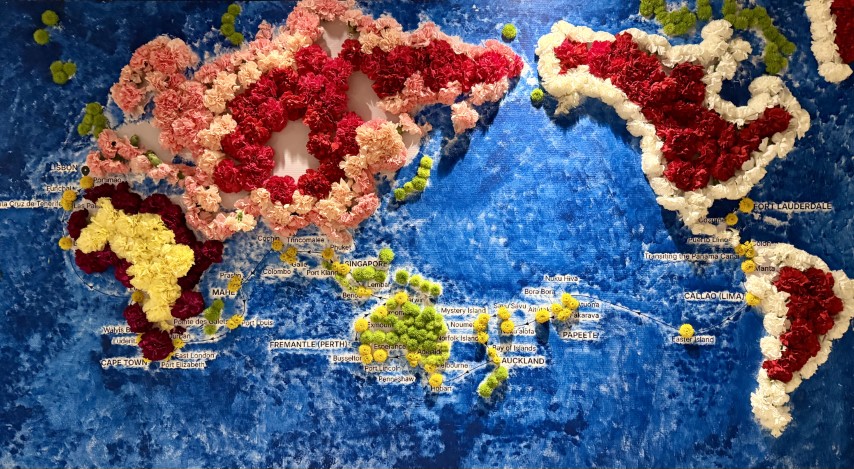
2026 World Cruise
January 6 - May 27, 2026
Enjoy travelling around the world
The oceans are always calling and looking to see who answers — and for many travelers, the ultimate answer is to take a cruise around the world. On Silversea’s World Cruise 2026, called “The Curious and the Sea: Discover How the World Was Discovered,” you can follow in the footsteps of historic explorers, becoming intimately acquainted with the primordial waters of the modern world and the stories behind each destination. Sailing on board Silver Dawn, guests will depart Fort Lauderdale on January 6, 2026, and arrive in Lisbon on May 27, 2026, recapturing the pioneering spirit of navigators from the past, exploring distant lands, diverse traditions, and delectable cuisine across six continents. The 140-day cruise calls at 58 ports in 30 countries.

We in the World Are We?

We are in Papeete, Tahiti, French Polynesia.

Papeete, Tahiti, French Polynesia
The Vibrant Gateway to Tahiti’s Island Paradise.
Papeete stands at the heart of the tropical paradise known as French Polynesia. It is a vibrant gateway to a world where islands are framed by pristine beaches, shimmering lagoons, and the endless shifting hues of the South Pacific.
As the spirited capital of French Polynesia, Papeete blends urban energy with island charm, making it an ideal starting point for discovering the many wonders of Tahiti. The island itself is a masterpiece of natural beauty: dramatic cliffs and the verdant mountains rise sharply from the coastline, while expansive ocean vistas stretch toward the horizon in the brilliant shades of blue.
A magnificent lagoon encircles much of Tahiti, its crisp, crystal-clear waters inviting you to snorkel among the colorful coral gardens and schools of tropical fish. Among the shores, you’ll find the island’s black-sand beaches – a striking reminder of Tahiti’s volcanic origins – alongside powerful blowholes that thunder with the force of the sea. Inland, lush valleys, cascading waterfalls, and ancient archaeological sites beckon with adventures to explore the island’s rich cultural and natural heritage.
To visit Papette is to embrace a lifestyle shaped by the gentle rhythm of the ocean and the warm spirit of Polynesian hospitality. Whether you wander its lively markets, savor fresh island cuisine, or simply soak in the serenity of the tropical landscape, Papeete offers a chance to unwind, reconnect, and surrender to the intoxicating pace of life in this extraordinary paradise.


Today’s Excursion – Sunset Cruise
We set sail on a 30-minute lagoon navigation, during which we explored Polynesian myths, such as Tangaroa, Hina, and Maui,
and learn about traditional navigation and fishing practices that have been passed down through generations. As the sun
began to set, we enjoyed a spectacular view of the Polynesian sunset, casting a golden glow over the lagoon and creating a truly
magical atmosphere.


Tonight’s dinner was in The Atlantide Restaurant.


9:15 Showtime! Silversea Proudly Presents: Emotions
Join your Cruise Director Moss as he presents the Silversea Singers and Dancers for a taste of what’s to come.
You will also meet people who will keep you intrigued and entertained.


Where in the World Are We?


Tahiti is the largest island of the Windward group of the Society Islands in French Polynesia. It is located in the central part of the Pacific Ocean and the nearest major landmass is Australia.
It is divided into two parts, Tahiti Nui (bigger, northwestern part) and Tahiti Iti (smaller, southeastern part), the island was formed from volcanic activity; it is high and mountainous with surrounding coral reefs. Its population was 189,517 in 2017, making it by far the most populous island in French Polynesia and accounting for 68.7% of its total population.
Tahiti is the economic, cultural, and political center of French Polynesia, an overseas collectivity and an overseas country of the French Republic. The capital of French Polynesia, Papeʻete, is located on the northwest coast of Tahiti. The only international airport in the region, Faʻaʻā International Airport, is on Tahiti near Papeʻete. Tahiti was originally settled by Polynesians between 300 and 800 CE. They represent about 70% of the island’s population, with the rest made up of Europeans, Chinese, and those of mixed heritage. The island was part of the Kingdom of Tahiti until its annexation by France in 1880, when it was proclaimed a colony of France, and the inhabitants became French citizens. French is the sole official language, although the Tahitian language (Reo Tahiti) is also widely spoken.


Today’s Excursion
We surveyed the sights east of Papeete, including the atmospheric home of an acclaimed author and the point where landmark planetary observations were made. This remarkably scenic drive traveled first to the James Norman Hall Museum, home of an Iowa-born author living far from the cornfields – and writing several famous novels set in the South Pacific, including 1932’s Mutiny on the Bounty. The tour of his bungalow-style home and garden revealed a setting that must have added to his inspiration. Interestingly, this adventurous WWI hero’s creativity definitely passed on to the next generation; his son Conrad was a three-time Oscar-winning cinematographer on films such as Butch Cassidy and the Sundance Kid. The author is buried above the house on a mountainside overlooking Matavai Bay, which we looked over when we visited Venus Point. Home to a striking lighthouse and abundant history, this point of land is where Captain Cook recorded the transit of Venus on his groundbreaking first voyage around the world. Coincidentally, Captain Bligh and his crew of the real-life Bounty called at this same spot about 20 years later. A gorgeous view from atop Tahara’a viewpoint.


